
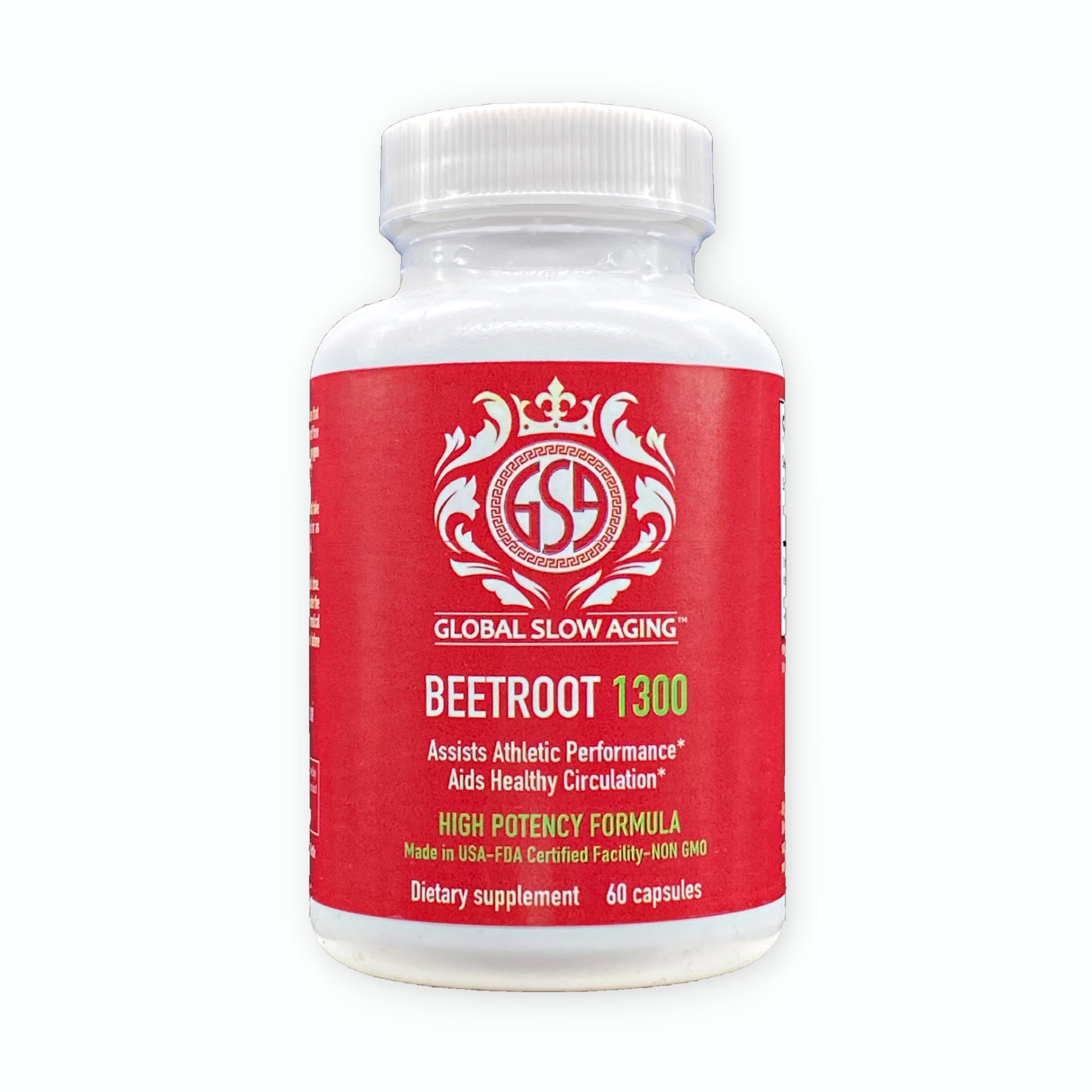

GSA Beetroot 1300
BEETROOT 1300 is a rich source of nitrates that help dilate blood vessels and improve blood flow to muscles, increasing the distribution of oxygen and essential nutrients to the body's cells.*
Main Health Benefits*
- Assists Athletic Performance
- Aids Healthy Circulation
How to Use It
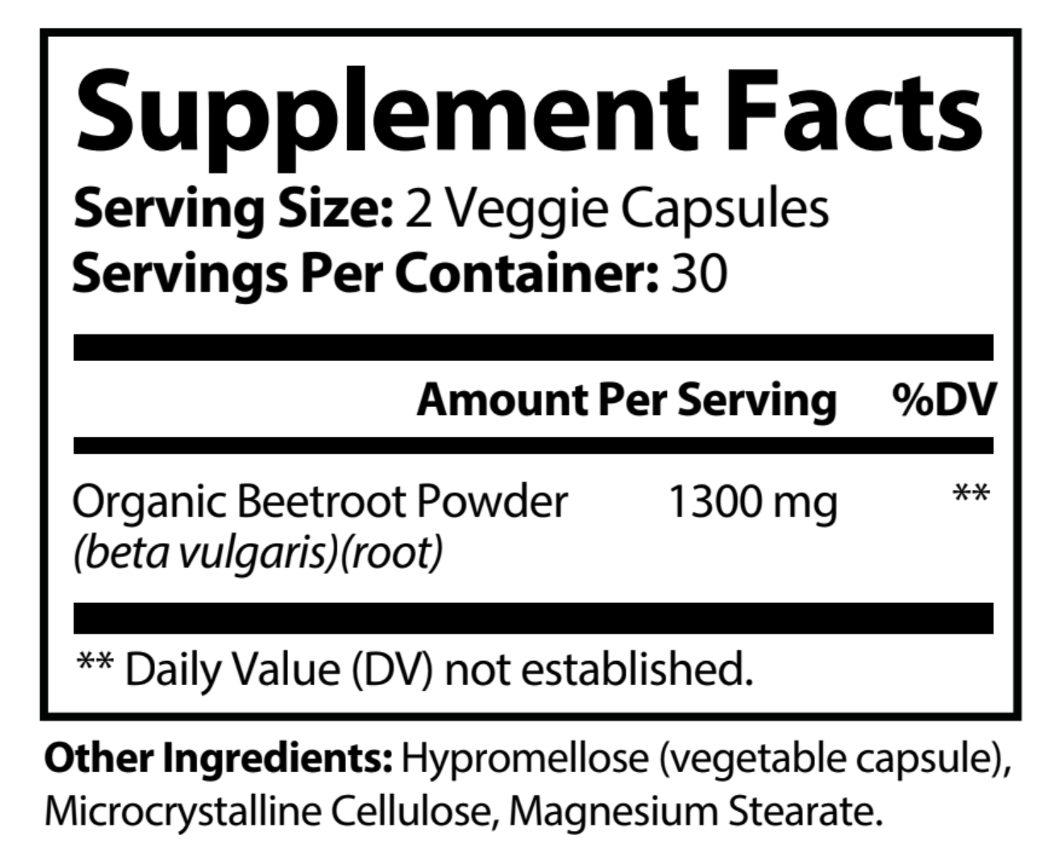
As dietary supplement, take 2 capsules once a day with food or as directed by your healthcare professional.
* These statements have not been evaluated by the Food and Drug Administration. This product is not intended to diagnose, treat, cure or prevent any disease.
Choose options
Recommended by scientists phd

FDA certified facility

Good manufacturing practice

made in the USA

online secure payments
DISCLAIMER
The research cited below reflects published studies conducted on similar active ingredients used in this product. However, these studies were not performed on this product itself. We cite this research for educational purposes, to highlight the scientific basis behind our ingredient selection, and not to imply that this product will necessarily replicate these results.
KEY ACTIVE INGREDIENTS

Beetroot
Beetroot powder (from Beta vulgaris root) is naturally rich in inorganic nitrate, betalain pigments, and polyphenols that support nitric‑oxide–mediated vasodilation, healthy blood flow, and cellular antioxidant defenses (Clifford et al., 2015; Milton‑Laskibar et al., 2021).
In healthy adults, randomized controlled trials and meta-analyses show that nitrate‑rich beetroot intake can assist athletic performance by lowering the oxygen cost of exercise, improving time‑to‑exhaustion, and enhancing endurance, particularly in recreationally active individuals (Lansley et al., 2011; Domínguez et al., 2017). Multiple clinical trials and systemic reviews also indicate that regular beetroot or beetroot‑juice consumption aids healthy circulation by lowering systolic blood pressure and improving vascular function in otherwise healthy or normotensive adults (Siervo et al., 2013; Lara et al., 2016). In addition, beetroot’s betalains and phenolic compounds exhibit strong radical-scavenging and antioxidant effects in human and preclinical studies, contributing to protection against oxidative stress and exercise-induced muscle damage, which may support recovery and overall cardiovascular resilience (Hadipour et al., 2020; Razzak et al., 2024).*
Experience the Power of Ethnopharmacology in Traditional Medicine